Price And Application Scope Of 10 Square Wires
Dec 09, 2021
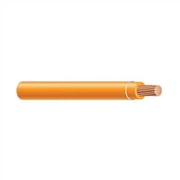
Price and application scope of 10 square wire 10 square copper bv national standard wire body insulation adopts environmental protection PVC, environmental protection and safety, fire prevention and flame retardant, and the open fire will subside immediately after leaving. The conductor is made of 99.99% oxygen free copper. The copper wire has bright appearance, low resistivity and excellent conductivity
Price and application scope of 10 square wires
The insulation of 10 square copper bv national standard wire body adopts environment-friendly polyvinyl chloride, which is environment-friendly, safe, fire-resistant and flame-retardant. The open fire will subside immediately after leaving. The conductor is made of 99.99% oxygen free copper. The copper wire has bright appearance, low resistivity, excellent conductivity and high safety.
General purpose single core hard conductor non sheathed wire is suitable for wires and cables with AC voltage of 450 / 750V and below. In normal use, the high temperature of the conductor is 70 ℃. It is suitable for fixed wiring of electrical appearance equipment and power lighting. Small specifications are mostly used for concealed wiring in construction engineering and home decoration.
10 square copper bv national standard wire is mainly used for power supply, lighting, socket and air conditioning. It is suitable for power plants, daily appliances, appearance and telecommunication equipment with AC voltage of 450 / 750V and below. Hard wire has a certain hardness, which will be more convenient in angle folding and straightening.
The long-term allowable working temperature of all types of wires and cables shall not exceed 70 ℃. The laying temperature of wires and cables shall be lower than 0 ℃: the allowable bending radius of wires and cables with outer diameter (d) less than 25mm shall not be less than 4D; The allowable bending radius of wires and cables with outer diameter (d) of 25mm and above shall not be less than 6D.
In order to distinguish zero line, live line and ground line, the colors of wires are also different: red is generally used for live line, yellow is generally used for zero line, green is generally used for zero line, blue is generally used for zero line, and two colors are generally used for ground line.