


The Importance And Applications Of Home Appliance Wiring Harnesses
Nov 13, 2026
Why Are Wiring Harnesses Important in Home Appliances?
A home appliance contains more than its visible housing, motor, or control panel. Inside the product, electrical components need to connect and work together. A wiring harness provides these connections through an organized arrangement of wires, terminals, and connectors.
For example, a washing machine needs electrical connections between its control board, motor, water inlet valve, drain pump, and other components. A refrigerator uses wiring to connect its compressor, fans, temperature sensors, lighting, and control system. The exact layout depends on the appliance model and electrical design.
Without the correct wiring connections, individual components cannot perform their intended functions. A properly specified home appliance wiring harness helps manufacturers arrange these connections, simplify product assembly, and maintain a consistent wiring layout.
For manufacturers sourcing wiring assemblies, our wire harness products cover appliance-related wiring requirements. You can also see a specific example in our washing machine wire harness product page.
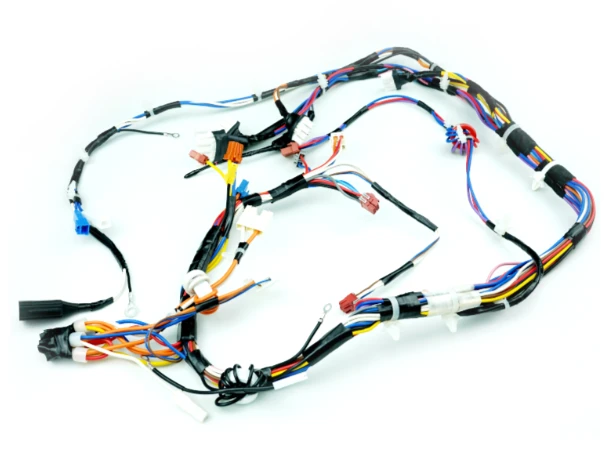
Where Are Home Appliance Wiring Harnesses Used?
Wiring harnesses are used in many household electrical products. Their structure changes according to the components inside the appliance, the number of electrical connections, and the available installation space.
1.Washing Machines
A washing machine wiring harness connects the electrical components responsible for washing, spinning, water supply, and drainage. Depending on the model, it may link the control board, drive motor, water inlet valve, drain pump, door lock, and water-level sensor.
The harness needs to follow the internal layout of the machine. Wire lengths and connector positions must match the locations of the components to avoid interference with moving parts and other assemblies.
2.Refrigerators
Refrigerators use wiring harnesses to connect components involved in cooling and temperature control. These may include the compressor, evaporator fan, condenser fan, temperature sensors, defrost heater, lighting, and control board.
Different refrigerator designs require different wiring arrangements. A side-by-side refrigerator, for example, may have a different internal wiring layout from a compact refrigerator.
3.Air Conditioners
An air conditioner contains electrical connections between its control board, fan motor, compressor, temperature sensors, and other operating components. The wiring harness organizes these connections within the indoor or outdoor unit.
The harness design depends on the air conditioner's structure and electrical configuration. Indoor and outdoor units may require different wiring assemblies.
4.Coffee Machines
Coffee machines use wiring to connect heating elements, pumps, control boards, switches, sensors, and other electrical parts. The harness layout depends on the machine's functions and internal arrangement.
For manufacturers, connector compatibility and wire routing are important because the wiring must fit within a relatively compact product housing.
5.Water Purifiers and Water Dispensers
Water-related appliances may use wiring harnesses to connect pumps, control boards, heating or cooling components, indicator panels, and sensors. The arrangement varies according to whether the product provides filtration only, heating, cooling, or several functions.
The installation environment also needs to be considered when selecting wire insulation and protective materials.
6.Other Household Appliances
Wiring harnesses are also used in products such as rice cookers, dishwashers, televisions, and intelligent toilets. Each appliance has its own electrical layout and connection requirements.
The number of wires, connector types, and harness branches depend on the product's functions rather than simply its size.
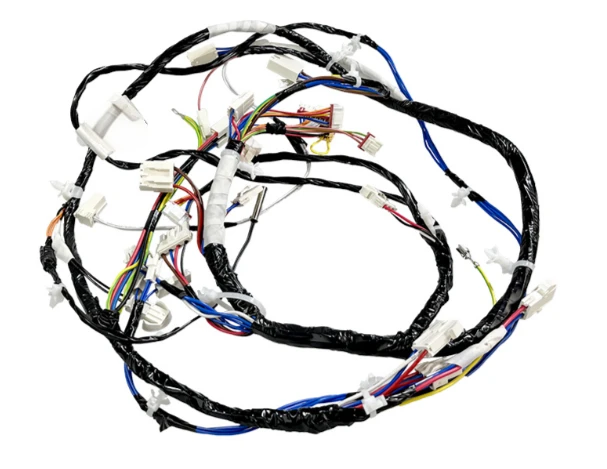
What Does a Home Appliance Wiring Harness Consist Of?
Although the structure varies by appliance, most home appliance wire harnesses contain several basic components.
| Component | Function |
|---|---|
| Electrical wires | Carry power or signals between components |
| Terminals | Provide electrical contact at connection points |
| Connectors | Join the harness to control boards and other components |
| Insulation | Covers conductors and provides electrical separation |
| Protective sleeves or tubes | Group and protect wires where needed |
| Cable ties or tape | Keep wires arranged in the required layout |
The wire specification depends on the electrical load, voltage, operating temperature, and installation conditions. Terminals and connectors must also match the wire size and the connection interface of the appliance.
For this reason, a home appliance wiring harness should be designed around the actual electrical diagram and physical structure of the product.
How Does a Wiring Harness Affect Appliance Assembly?
A wiring harness is not just a group of wires. Its layout can affect how an appliance is assembled, how easily connections can be identified, and how the internal space is used.
1.Keeps Internal Wiring Organized
A defined harness layout groups related wires and guides them toward their connection points. This helps prevent loose wires from spreading across the appliance housing.
2.Makes Production Assembly More Consistent
When wire lengths, branches, and connector positions are specified in advance, assembly workers can follow a repeatable wiring arrangement. This is useful for manufacturers producing the same appliance model in multiple batches.
3.Helps Reduce Connection Errors
Clearly defined connectors and wire arrangements make it easier to identify where each connection belongs. Correct terminal positions and connector configurations are especially important when an appliance contains many electrical components.
4.Supports Maintenance and Component Replacement
An organized wiring layout can make electrical connections easier to locate when a component needs inspection or replacement. This can reduce the time spent tracing individual wires during service work.
What Should Appliance Manufacturers Consider When Choosing a Wiring Harness?
A wiring harness needs to match both the electrical requirements and the physical structure of the appliance. Before sourcing a custom assembly, manufacturers should confirm the following details.
| Selection Factor | What to Confirm |
|---|---|
| Appliance model | Product type and internal wiring layout |
| Electrical requirements | Voltage, current, and circuit function |
| Wire specifications | Conductor size, insulation, and color |
| Wire dimensions | Overall length and individual branch lengths |
| Connectors | Connector type, pin count, and mating interface |
| Terminals | Terminal type and compatibility with the wire |
| Operating conditions | Temperature, moisture, vibration, and installation environment |
| Order quantity | Prototype, initial production, and recurring demand |
A wiring diagram, technical drawing, or physical sample can help a supplier understand the required configuration. Manufacturers should also confirm whether the harness needs specific protective materials or testing procedures.
Home Appliance Wiring Harness vs. Power Cord
A wiring harness and a power cord both contain electrical conductors, but they serve different purposes in a household appliance.
A power cord connects the appliance to an external electrical supply. It normally includes a plug and the cable needed to bring power into the product.
A wiring harness is usually installed inside the appliance. It connects the control board, motor, sensors, switches, heating elements, and other electrical components according to the product's circuit design.
For example, a washing machine may use a power cord to receive electricity from a wall outlet, while its internal wiring harness distributes electrical connections to the motor, control board, pump, and other parts.
Manufacturers sourcing both components can also review our power cord products.
Custom Home Appliance Wiring Harnesses from Hongzhou Cable
Hongzhou Cable supplies power cords and wire harness products for electrical and appliance applications. Its product range includes washing machine wire harnesses, which are used to connect electrical components within household washing machines.
For a custom wiring harness inquiry, manufacturers can provide a wiring diagram, sample, or detailed connection requirements. Wire specifications, connector types, dimensions, and order quantities can then be reviewed to determine whether the project fits the available manufacturing scope.
Supplying both power cords and wire harnesses also gives appliance manufacturers an option when sourcing external power connections and internal wiring components from the same supplier.
FAQ
1.What is a home appliance wiring harness?
A home appliance wiring harness is an assembly of wires, terminals, and connectors that links electrical components inside a household appliance. It carries power or signals between components according to the appliance's circuit design.
2.Which household appliances use wiring harnesses?
Wiring harnesses are commonly used in washing machines, refrigerators, air conditioners, coffee machines, water purifiers, rice cookers, dishwashers, and other electrical appliances.
3.Can home appliance wiring harnesses be customized?
Yes. A wiring harness can be specified according to the appliance's circuit diagram, wire length, conductor size, connector type, terminal configuration, and installation requirements. The final design depends on the product and the supplier's manufacturing capabilities.
4.What is the difference between an appliance wiring harness and a power cord?
A power cord supplies electricity from an external source to the appliance. An internal wiring harness connects the appliance's electrical components, such as motors, control boards, switches, and sensors.
5.What information is needed to order a custom appliance wiring harness?
Manufacturers should prepare a wiring diagram or sample, wire specifications, connector and terminal details, required dimensions, operating conditions, and estimated order quantity. These details help the supplier review the design and provide a more accurate quotation.


