You may be interested in
Yes, all our power cords strictly adhere to the UK BS 1363 standard (for plugs), the EU EN 60228 standard (for conductors), and the EN 60335 standard (for general safety). They are also UKCA and CE certified, ensuring they can be used with electrical equipment in both the UK and EU markets, ensuring safety and compliance.
Our power cords, depending on the specifications, have current ratings ranging from 3A to 16A and a voltage range of 230V (compliant with UK standard voltage). The specific power cord you choose depends on the power of your device:
3A-5A: Suitable for small appliances (such as phone chargers and desk lamps);
10A-13A: Suitable for medium-sized appliances (such as microwave ovens and vacuum cleaners);
16A: Suitable for high-power devices (such as ovens and air conditioners).
Please provide your device specifications when purchasing, and we will assist in matching you with the most suitable specifications.
The insulation layer is made of heat-resistant PVC (-15°C to 70°C) or silicone rubber (-40°C to 180°C, suitable for high-temperature environments). The conductor is high-purity oxygen-free copper (excellent conductivity). The outer sheath is formulated with a wear-resistant and oil-resistant formula. We can recommend material options based on the usage scenario (e.g., indoor, industrial, outdoor).
Yes. We support the following customizations:
Length: 0.5m to 50m (must meet safety standards; longer lengths require consideration of wire diameter);
Plug: In addition to standard British BS 1363 plugs, we also accept European and US plugs (certification must be confirmed in advance);
Color: Standard black, white, and gray; custom colors are available (subject to a minimum order quantity);
Printing: We can add brand logos, model numbers, certification marks, etc. (design draft required).
How do we ensure the environmental friendliness of our products? Are they compliant with environmental regulations such as RoHS?
The raw materials used in our power cords comply with EU RoHS 2.0 (restriction of six hazardous substances) and REACH regulations (substances of very high concern list). Each batch of products is accompanied by a third-party environmental testing report to ensure the absence of lead, halogen, and other harmful ingredients.
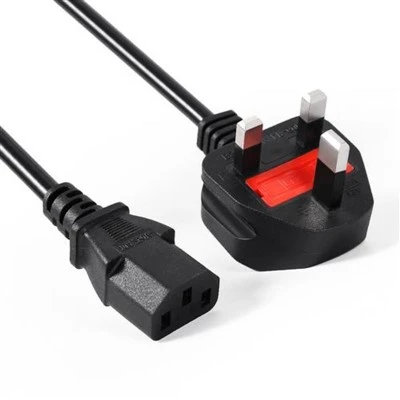
Plug Standards: Must be equipped with a BS 1363 standard plug, a plug type unique to the UK.
Appearance: Triangular (inverted) shape, with a thicker ground pin at the top and thinner live and neutral pins at the bottom.
Safety Design: The plug has a built-in fuse (common specifications: 3A, 5A, and 13A) to match the power rating of the appliance to prevent overload. The plug housing must be made of flame-resistant material, and the pins must have insulating sheaths (some designs).
Voltage and Current Compatibility: The UK domestic voltage is 230V AC (50Hz), so the power cord's voltage rating must match this standard. The current rating is divided into multiple levels based on the power rating of the appliance (such as 3A, 5A, 10A, 13A, etc.), which must correspond to the plug's fuse specifications.
Cable Specifications
Cables must comply with relevant UK and EU standards.
Conductor: Typically made of high-purity oxygen-free copper to ensure conductivity;
Insulation and sheath: Mostly made of PVC (temperature resistant range -15°C to 70°C); some industrial cables use high-temperature resistant materials such as silicone rubber;
Wire diameter: Designed based on the rated current; for example, a 13A power cable typically has a conductor cross-sectional area of 0.75mm² or 1.0mm².
Certification Requirements
Power cables legally sold in the UK must be UKCA certified (the UK's domestic certification replacing the original CE certification after Brexit). Some products exported to the EU must also meet CE certification to ensure compliance with mandatory safety and environmental requirements.
Application Scenarios
UK power cables are suitable for all electrical devices used in the UK, including:
Household appliances (such as refrigerators, washing machines, and microwave ovens);
Small electronic devices (such as laptops and mobile phone chargers);
Industrial equipment (such as machine tools and instrumentation); etc.