Power Cord Guide: Key Standards, Terminology, And Applications Explained
Jan 16, 2025
As a key component of power transmission, power cords play a vital role in almost every electrical device. From TVs and computers used in daily home use to high-power devices in industrial facilities, power cords provide stable power support for various devices.

Contents
1. Definition of power cord
2. What are the terms related to power cords
3. How power cords work
4. Types of power cords
5. Power cord plugs
6. Conclusion
1. Definition of power cord
A power cord is a cable used to transmit electrical energy. It connects the power source (such as sockets, batteries, etc.) to the power-consuming device so that the current can pass smoothly and provide the power required for the device to operate. It is commonly used in home and commercial environments to connect various electrical appliances such as TVs, computers, refrigerators, and air conditioners.
2. What are the terms related to power cords
1)Plug: One end of the power cord that is used to plug into a power socket, usually with two or three metal pins for transmitting current.
2)Socket: The other end connected to the plug, usually located on an electrical device or power adapter.
3)Jacket: As the outermost protective structure of the power cord, its main function is to protect the internal
conductor and insulation layer from mechanical damage, chemical corrosion and environmental factors, and extend the service life of the power cord. Common jacket materials include rubber, PVC, etc.
4)Insulation layer: The material wrapped around the conductor to prevent current leakage and protect the power cord from damage.
5)Voltage level: refers to the maximum voltage that the power cord can withstand.
6)Current level: The maximum current value that the power cord can safely transmit.
7)Ground wire: The third wire included in some power cords is responsible for directing current to the ground to prevent electric shock.
8)Soft cord: It is made of insulated stranded wire conductors and connects the plug and connector. Its length ranges from 6.6 to 32.8 feet (2 to 10 meters), depending on the standard used when manufacturing the power cord.
9)Ground pin: The ground pin connects the conductive parts of the appliance to the ground. It enhances the safety of the appliance by directing any stray current directly to the ground.
3. How the power cord works
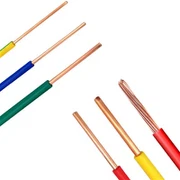
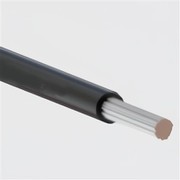
The power cord consists of several key components that work together to ensure the safe and efficient flow of current. The core of the power cord is one or more conductors, usually made of copper or aluminum, which act as a channel for current to flow from the power source to the powered device.
The conductor of the power cord provides a low-resistance path for the current, allowing the current to be smoothly transmitted from the power source to the powered device. In this process, the insulation layer prevents the current from leaking to the outside, ensuring the efficient transmission and safe use of electrical energy.
4. Types of power cords
Power cords can be divided into many types according to their use and design. Common types include:
Standard power cords: used for ordinary home and office equipment, such as table lamps, computers, TVs, etc.
Extension power cords: used to extend the distance of the power socket to facilitate the use of equipment far away from the socket.
Industrial power cords: designed for industrial environments, usually stronger than standard power cords, and can withstand higher voltages and currents.
High-power power cords: used for high-power devices, such as power tools, large household appliances, etc., the conductors of these power cords are usually thicker to support a larger current load.
Adjustable power cords: used for adjustable devices, allowing the voltage or current to be adjusted within a specific range.
At present, as a professional power cord manufacturer, we, HONGZHOU CABLE, have produced British power cords, American power cords, and South African power cords for different regions, covering a wide range of products.
5. Power cord plugs
1) Classification by country
USA plug
Powercord USA Plug: Usually has two parallel flat pins, sometimes with a round grounding pin. The US standard plug in the picture has a typical American design and is suitable for sockets in parts of the United States, Canada, Japan, etc.
Us Plug Power Cord: Has the characteristics of an American plug and is used to connect to a US standard power socket.

Australia plug
AU Power Cord Plug: It is in the shape of an eight, has two flat pins, and has a larger angle. It is suitable for sockets in countries and regions such as Australia and New Zealand.

2) Classification by the number and shape of pins
2-pin plug
2 Pin Power Plug: Only two pins, no grounding function, suitable for some small, low-power electrical equipment with low requirements for leakage risk, such as some small chargers, etc.

Three-pin plug
16A Power Cord Plug: It has three pins, one of which is used for grounding, which can provide better leakage protection and is suitable for electrical appliances with high power or high safety requirements, such as air conditioners, electric water heaters, etc.

C19 Plug Power Cord: This plug may have specific uses and specifications. The three-pin design also has a grounding function. It is often used in equipment such as servers and data centers to ensure stable and safe power connections.

3) Classification by plug color
Black Power Cord Plug: The main feature is that the plug is black in color. It may have certain characteristics in terms of material, durability, etc. It is suitable for a variety of electrical equipment. The color may be to match different usage environments or equipment styles.

4) Classification by special models
BCO1 Socket Plug: It has a unique design and specifications and may be suitable for specific equipment or occasions. It is different from common plugs in shape, size or interface method and needs to be used with corresponding sockets.

These different types of plugs differ in shape, number of pins, applicable areas and equipment to meet different power connection needs and safety standards. When using, it is necessary to ensure that the plug matches the local socket standard to ensure power safety and normal operation of the equipment.
6. Conclusion
Power lines are the key link in power transmission and run through all fields. In the future, with the development of science and technology and the improvement of safety and environmental protection requirements, power lines will be more efficient, safer and more environmentally friendly.