


Custom Wire Harnesses For Industrial Applications
Nov 11, 2026
Industrial equipment often contains multiple electrical components that need to be connected in a specific order. Individual wires can become difficult to organize when they run between control units, motors, switches, sensors, and other parts of a machine. A wiring harness brings these connections together in an organized assembly.
Custom wire harnesses for industrial applications are made according to the electrical layout and installation requirements of specific equipment. Wire lengths, connector types, terminal positions, and branch layouts can all affect how the harness fits into the machine.
For equipment manufacturers, choosing the right industrial wire harness is not just about connecting wires. The assembly needs to match the equipment's electrical requirements, available installation space, and operating conditions.
What Is an Industrial Wire Harness?
An industrial wire harness is an organized assembly of wires, connectors, terminals, and related components used to connect electrical parts within industrial equipment.
Unlike a single electrical cable, a wire harness may contain multiple wires with different lengths and connection points. These wires are arranged into one assembly so they can be routed and connected according to the machine's electrical design.
For example, a piece of production equipment may need electrical connections between its control panel, motor, switches, and sensors. An industrial wiring harness groups the required wires and connectors into a defined layout, making the connections easier to identify and install.
The structure of an industrial wire harness depends on the equipment. Some assemblies have only a few wires and connectors, while others have multiple branches and connection points.
Where Are Custom Wire Harnesses Used in Industrial Applications?
Custom industrial wire harnesses are used in different types of equipment. Their configurations vary according to the electrical components, installation positions, and operating requirements of each machine.
1. Manufacturing and Production Equipment
Manufacturing equipment often contains motors, switches, control units, and other electrical components that need to work together.
A wire harness can connect these components according to the machine's wiring layout. The required wire lengths and connector positions depend on the equipment structure and the location of each electrical part.
2. Packaging Machinery
Packaging machines may include control panels, motors, sensors, and operating switches. These components need electrical connections to support different machine functions.
A custom wiring harness can organize the connections between these parts and follow the routing requirements inside the machine.
3. Pumps and Motor-Driven Equipment
Pumps and other motor-driven equipment may require internal wiring between motors, switches, control components, and power connections.
The harness configuration depends on the equipment's electrical design, motor specifications, and installation environment. Wire and connector selection should be confirmed against the actual operating requirements.
4. Industrial Control Cabinets
Control cabinets contain electrical components such as relays, terminal blocks, switches, and control devices. Their internal wiring needs to follow a clear connection layout.
Depending on the cabinet design, wire assemblies can help organize connections between components and simplify installation during equipment assembly.
5. General Electrical Equipment
Other industrial electrical products may also use wiring harnesses to connect internal components. The specific application can differ from one product to another, so the harness should be designed around the equipment rather than selected as a universal assembly.
What Are the Main Components of an Industrial Wiring Harness?
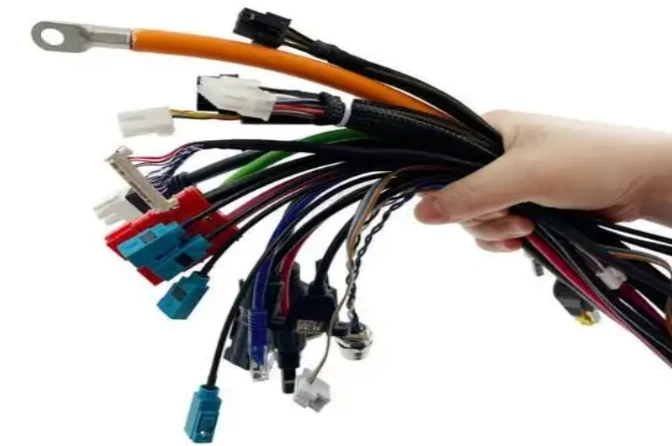
The components used in an industrial wiring harness depend on its electrical requirements and physical layout. Common components include:
1.Electrical Wires
Wires carry electrical power or signals between connected components. Their specifications may include conductor material, wire size, insulation material, color, and length.
The correct wire should be selected according to the current, voltage, temperature, and installation requirements of the equipment.
2.Connectors and Housings
Connectors provide the connection points between the wiring harness and electrical components. Connector housings keep the terminals in position and help establish the required electrical connections.
The connector model, pin count, and mating configuration must match the components used in the equipment.
3.Terminals
Terminals connect individual wires to connectors or other electrical connection points. Crimped terminals are commonly used in wire harness assemblies.
Their size and type need to be compatible with the wire and connector specifications.
4.Protective Sleeves and Tubing
Depending on the installation environment, a wiring harness may use sleeves, tubing, or other protective materials to group and protect wires.
The choice depends on factors such as abrasion, heat exposure, movement, and available installation space.
What Makes an Industrial Wire Harness Different from a Standard Wire Assembly?
An industrial wire harness is usually designed around the electrical and mechanical requirements of a particular machine. Its configuration can be more application-specific than a simple cable with connectors at both ends.
| Comparison | Basic Wire Assembly | Industrial Wire Harness |
|---|---|---|
| Structure | Often a simple wire or cable with connection ends | May contain multiple wires and branches |
| Connection points | Usually limited | Can connect several equipment components |
| Wire arrangement | Simple routing | Follows a defined equipment layout |
| Customization | Mainly based on length and end connections | May involve wire lengths, branches, connectors, and terminal positions |
| Installation | Connected individually or as a simple assembly | Installed according to the equipment's wiring layout |
The distinction depends on the actual product design. Some industrial applications only require a simple cable assembly, while others need a multi-branch wiring harness.
Understanding the required connection structure helps manufacturers choose the right type of assembly.
What Should Be Considered When Designing Custom Wire Harnesses for Industrial Applications?
Before sourcing a custom industrial wire harness, equipment manufacturers should confirm several technical details. These specifications help the supplier understand the required assembly and assess whether it matches the intended application.
1. Electrical Requirements
Start with the electrical requirements of the equipment. These may include operating voltage, current, wire size, conductor material, and insulation requirements.
Wire specifications should be selected according to the actual electrical load and applicable product requirements.
2. Wire Length and Routing Layout
The harness needs to fit the available space inside the equipment. Incorrect wire lengths can make installation difficult or affect the routing of other components.
Manufacturers should provide the overall harness layout, individual branch lengths, and connection positions whenever possible.
3. Connector and Terminal Selection
Connectors and terminals must match the corresponding electrical components. Differences in pin count, housing shape, terminal size, or connection positions can prevent proper installation.
Providing connector part numbers, drawings, or reference samples can help reduce misunderstandings.
4. Operating Environment
Industrial equipment may operate under different conditions, including heat, moisture, vibration, dust, or repeated movement.
These conditions can affect the choice of wire insulation, connectors, and protective materials. The required specifications should be confirmed for the actual equipment rather than assumed to be the same for every industrial application.
5. Installation Space and Assembly Method
The physical structure of the equipment affects how the harness is arranged and installed. Manufacturers should consider available routing space, fixing positions, bending requirements, and access to connection points.
A clear layout helps the supplier understand how the harness will be installed in the finished equipment.
How Are Custom Industrial Wire Harnesses Prepared for Production?
The production of a custom wire harness starts with understanding the equipment's requirements. Before manufacturing, the supplier needs enough information to confirm the wire configuration and connection details.
A typical preparation process includes the following steps:
Step 1: Review the drawing or sample
The supplier reviews the wiring diagram, product drawing, or reference sample to understand the required connections, wire lengths, and branch layout.
Step 2: Confirm materials and components
Wire specifications, connectors, terminals, and protective materials are checked against the customer's requirements.
Step 3: Confirm the assembly configuration
The wire arrangement, terminal positions, connector orientation, and overall dimensions should be confirmed before production.
Step 4: Manufacture according to the approved specifications
The assembly is prepared according to the confirmed wire and component requirements. The specific manufacturing methods depend on the harness structure and available production capabilities.
Step 5: Check the finished assembly
The finished harness should be checked against the agreed specifications. Depending on the product requirements and available testing arrangements, checks may include wire connections, terminal positions, connector configuration, and electrical continuity.
The exact inspection items should be agreed upon before production.
Custom Wire Harnesses vs. Power Cords for Industrial Equipment
Industrial equipment may require both internal wiring assemblies and external power connections. Although wire harnesses and power cords are related to electrical connections, they serve different purposes.
A wire harness connects electrical components within the equipment. A power cord connects the equipment to an external electrical supply.
For example, a machine may use an internal wiring harness to connect its control components and motor, while a separate power cord supplies electricity from an external source.
| Comparison | Industrial Wire Harness | Power Cord |
|---|---|---|
| Main function | Connects internal electrical components | Supplies power from an external source |
| Typical position | Inside equipment | At the equipment's power input |
| Main components | Wires, connectors, terminals, and branches | Power cable, plug, and related components |
| Main design considerations | Wiring layout, wire length, and connection details | Rated electrical requirements, plug type, and cord length |
For equipment manufacturers sourcing both product types, working with a supplier that handles wire harnesses and power cords can help coordinate the requirements for internal wiring and external power connections.
What Information Should You Provide When Requesting a Custom Wire Harness?
When contacting a wire harness supplier, providing clear technical information helps make the quotation and production review more efficient.
If available, prepare:
✅ Wiring diagram: Shows how the wires connect to different electrical components.
✅ Product drawing: Provides the harness dimensions, branch positions, and installation layout.
✅ Wire specifications: Includes wire size, conductor requirements, insulation type, and color.
✅ Connector details: Identifies connector models, pin counts, and terminal requirements.
✅ Application details: Explains what equipment the harness will be used in and its operating conditions.
✅ Order quantity: Provides the estimated quantity and expected purchasing schedule.
If a complete drawing is not available, a physical sample and basic equipment information can help start the discussion. The supplier will still need to review the missing specifications before confirming the assembly.
Wiring Harness Supply from Hongzhou Cable
Hongzhou Cable supplies power cords and wire harnesses for electrical and appliance-related products. Its wire harness offering provides an option for manufacturers looking for internal wiring assemblies alongside external power cord products.
For projects involving standard wire harness assemblies, customers can share drawings, samples, or technical requirements for review. Details such as wire lengths, connector types, terminal configurations, and branch layouts need to be confirmed according to the actual product design.
You can explore our wire harness products to learn more about the current product range. For an example of an appliance-related assembly, see our washing machine wire harness page.
If your equipment also requires an external power connection, you can review our power cord products.
FAQ
1.What is an industrial wire harness?
An industrial wire harness is an assembly of wires, connectors, terminals, and related components used to connect electrical parts within industrial equipment. Its configuration depends on the machine's electrical design and installation requirements.
2.What industries use custom wire harnesses?
Custom wire harnesses are used in manufacturing equipment, packaging machinery, pumps, control cabinets, and other electrical equipment. The required structure and specifications vary depending on the application.
3.Can industrial wire harnesses be customized?
Yes. A custom wire harness can be prepared according to the equipment's wiring diagram, drawing, or sample. Customization may involve wire lengths, connector types, terminal positions, and branch layouts, subject to the supplier's actual production capabilities.
4.What information is needed to order an industrial wire harness?
Manufacturers should provide a wiring diagram or sample, wire specifications, connector details, installation requirements, operating conditions, and estimated order quantity.
5.How do I choose the right wire for an industrial wiring harness?
Wire selection depends on electrical load, operating voltage, temperature, insulation requirements, and the equipment's installation environment. These details should be confirmed before the harness is manufactured.
6.What is the difference between an industrial wire harness and a cable assembly?
A cable assembly often refers to one or more cables prepared with connectors for a specific connection. A wire harness generally organizes multiple wires and branches into a defined layout for connecting different components. The actual distinction depends on the product structure.


