What Is A Wire Harness? Components, Manufacturing Process, And Applications
Oct 29, 2026

A wire harness is an organized assembly of wires, cables, connectors, terminals, and protective materials used to transmit electrical power or signals between components. It replaces multiple loose wires with a structured assembly that is easier to install, route, inspect, and maintain.
Wire harnesses are widely used in automotive systems, industrial machinery, electronic equipment, home appliances, and other products that rely on electrical connections. Their configuration depends on the equipment, electrical requirements, installation space, and operating environment.
For manufacturers developing electrical products, understanding wire harness components, manufacturing methods, and quality requirements helps ensure reliable connections throughout the product's service life.
What Does a Wire Harness Do?
A wire harness connects electrical and electronic components according to a defined wiring layout. Each wire follows a specified route and connects to the appropriate terminal or connector, allowing power and signals to reach their intended destinations.
A wire harness serves several practical purposes:
✅ Organizes electrical wiring: Groups multiple wires into a defined assembly, reducing loose cables and simplifying installation.
✅ Protects electrical connections: Uses insulation, sleeves, conduits, or other protective materials to help prevent abrasion, moisture exposure, and mechanical damage.
✅ Improves assembly efficiency: Allows multiple electrical connections to be installed as one prepared assembly instead of routing each wire separately.
✅ Supports consistent production: Standardized wire lengths, connector positions, and assembly layouts help maintain repeatable manufacturing quality.
✅ Simplifies inspection and maintenance: Labels, connector identification, and documented wiring layouts make it easier to trace connections and locate faults.
These benefits depend on the harness design, selected materials, manufacturing workmanship, and the conditions in which the assembly operates.
What Are the Main Components of a Wire Harness?
A wire harness contains several components, each serving a specific electrical, mechanical, or installation function. The exact configuration varies by application.
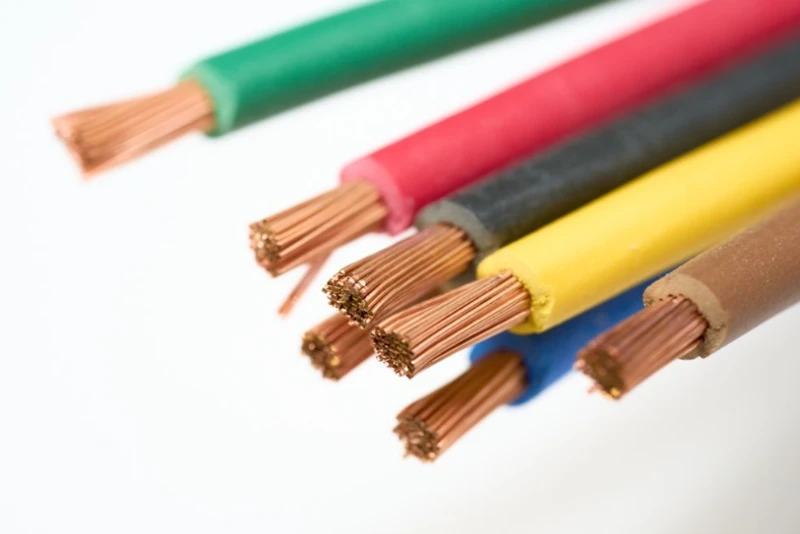
Wires and cables carry electrical current or signals between components. Their conductor size, insulation material, voltage rating, temperature rating, and flexibility must match the intended application.
For example, a power circuit may require a different conductor size from a low-current signal circuit. Equipment exposed to heat, vibration, or chemicals may also require specialized insulation.
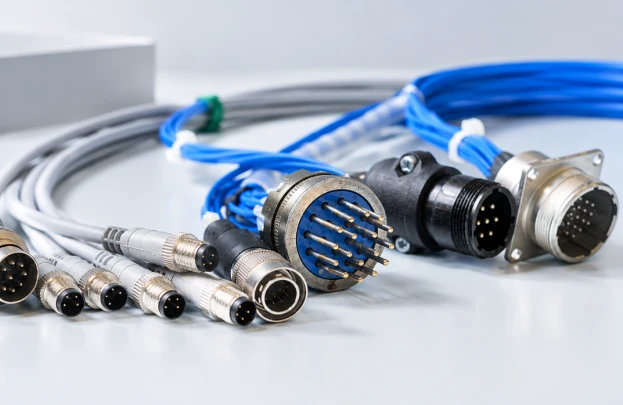
Connectors allow a wire harness to interface with other electrical components or equipment. Terminals establish the electrical contact between individual wires and connector housings or other connection points.
Connector type, pin configuration, terminal compatibility, and locking mechanisms affect connection reliability and installation.
Insulation prevents unintended electrical contact between conductors and surrounding materials. Additional coverings protect the assembled wires against external damage.
Common options include:
✅ Heat-shrink tubing
✅ Protective sleeves and braided sleeving
✅ Corrugated conduits
✅ Electrical tape
✅ Protective jackets
The appropriate covering depends on factors such as abrasion, temperature, moisture, flexibility, and available installation space.
Mounting components secure the harness to a chassis, enclosure, machine, or other supporting structure. Proper positioning helps prevent excessive movement, rubbing, and strain at connection points.
Labels and wire markers identify circuits, connectors, or harness branches. They support assembly accuracy, troubleshooting, and maintenance, particularly in complex electrical systems.
How Is a Wire Harness Manufactured?
Wire harness manufacturing combines documented specifications, wire processing, connector assembly, physical routing, and electrical testing. Although production methods vary by harness type and order volume, the general workflow includes the following stages.
Manufacturing begins with the electrical drawings, wire list, connector details, dimensions, and application requirements.
Important information includes conductor specifications, wire lengths, terminal types, connector pin assignments, protective coverings, and installation constraints. Clear specifications help prevent incorrect connections and component mismatches.
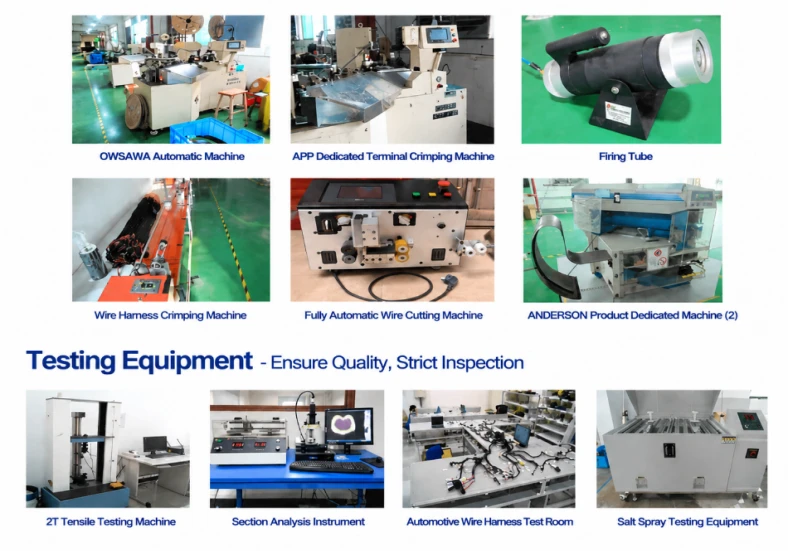
Wires are cut to the required lengths, and insulation is stripped from designated sections to expose the conductor for termination.
Accurate cutting and stripping are important because incorrect lengths can complicate routing, while damaged conductors or insulation can affect connection quality.
Terminals are attached to prepared wires using the specified termination method, commonly crimping. The terminated wires are then inserted into the correct connector cavities according to the wiring diagram.
Where required, seals, locks, and other connector components are fitted during assembly.
The wires are arranged according to the harness layout. Branches, connectors, clips, sleeves, and other protective components are positioned as specified.
Harness boards or assembly fixtures may be used to maintain wire routing and dimensions during production. This stage is particularly important for assemblies with multiple branches or complex connector arrangements.
Completed harnesses undergo appropriate inspections and electrical tests. Depending on the design and customer requirements, testing may include:
✅ Continuity testing: Checks whether the intended electrical paths are complete.
✅ Short-circuit testing: Identifies unintended electrical connections between circuits.
✅ Pin-to-pin verification: Confirms that wires connect to the correct terminals or connector positions.
✅ Insulation resistance testing: Evaluates insulation resistance when required by the product specification.
✅ Visual and dimensional inspection: Checks connector assembly, wire routing, labeling, and specified dimensions.
Not every harness requires every test. The inspection plan should reflect the product's electrical design, operating environment, and applicable requirements.
Before shipment, the harness is checked against its approved specifications. Identification, connector configuration, protective coverings, and packaging are verified as applicable.
Proper packaging also helps prevent tangling, connector damage, and abrasion during storage and transportation.
What Are the Different Types of Wire Harnesses?
Wire harnesses can be classified by their application, electrical function, construction, or environmental requirements. The following are common examples.
Automotive wire harnesses connect vehicle systems such as lighting, sensors, control units, infotainment equipment, and power distribution components. Their design must account for vibration, temperature changes, limited routing space, and the vehicle's electrical requirements.
For related product information, see Automotive Wire Harnesses .
Industrial wire harnesses are used in machinery, control cabinets, automation equipment, and production systems. Depending on the application, they may require abrasion-resistant coverings, secure mounting, specialized connectors, or protection against oil and other environmental factors.
Electronic equipment harnesses connect circuit boards, displays, power supplies, switches, and internal modules. Compact dimensions, accurate pin assignments, and compatible connectors are often important considerations.
Appliance wire harnesses connect motors, heating elements, sensors, control boards, and other internal components. Their specifications depend on the appliance's electrical load, temperature exposure, enclosure design, and applicable safety requirements.
Custom harnesses are manufactured to match a particular product's electrical and mechanical requirements. Wire lengths, conductor specifications, connector combinations, branch layouts, labels, and protective coverings can be specified for the intended application.
For equipment with unique wiring layouts or installation constraints, Custom Cable Harness Solutions can be explored alongside the required drawings and technical specifications.
Wire Harness vs. Cable Assembly: What Is the Difference?
The terms wire harness and cable assembly are sometimes used interchangeably, but they often describe different construction approaches.
| Feature | Wire Harness | Cable Assembly |
|---|---|---|
| Construction | Multiple individual wires organized into a defined bundle | One or more cables fitted with connectors or other terminations |
| Wire arrangement | Often includes branches and multiple connection points | Often follows a more direct cable route, although complex assemblies are also possible |
| Protection | May use tape, sleeves, conduits, clips, or other coverings | Often uses the cable's outer jacket, with additional protection where needed |
| Typical applications | Vehicles, machinery, appliances, and internal equipment wiring | Power connections, signal transmission, communication, and equipment interconnections |
| Main design considerations | Wire routing, branching, pin assignments, mounting, and protection | Cable construction, length, connector compatibility, electrical performance, and protection |
The distinction is not absolute. A cable assembly can contain multiple conductors and branches, while some wire harnesses use protective conduits or other structured cable components.
The most suitable term depends on the actual construction and the requirements of the application.

Where Are Wire Harnesses Used?
Wire harnesses are found in many industries because most electrical systems require organized, reliable connections between components.
✅ Automotive and transportation: Connect lighting, sensors, control modules, power distribution systems, and vehicle electronics.
✅ Industrial machinery: Link motors, control panels, sensors, actuators, and automation components.
✅ Consumer and commercial electronics: Connect internal modules, switches, displays, and power components.
✅ Home and commercial appliances: Connect control boards, motors, heaters, and other electrical parts.
✅ Medical equipment: Provide organized connections within diagnostic and monitoring equipment, subject to the applicable electrical safety and regulatory requirements.
✅ Telecommunications and networking equipment: Carry power and signals between modules and supporting hardware.
Each application has different electrical and mechanical demands. A harness designed for a stationary electronic device may not be suitable for equipment exposed to continuous vibration, high temperatures, or frequent movement.
What Affects Custom Wire Harness Manufacturing?
Custom wire harness manufacturing starts with the intended application rather than a one-size-fits-all configuration. Several factors influence the final construction and production requirements.
Voltage, current, circuit function, conductor size, and connector ratings determine the basic electrical configuration. These details help establish which wire and terminal combinations are suitable.
Overall length, branch dimensions, bend requirements, and mounting positions affect how the harness fits into the finished product. Incorrect routing or insufficient slack can place unnecessary strain on wires and connectors.
Connector housings, terminal types, wire sizes, and pin assignments must be compatible. The specified connection method and assembly requirements also influence manufacturing.
Temperature, moisture, vibration, abrasion, chemicals, and other exposure conditions affect material selection and protective construction. Requirements should be defined for the actual operating environment rather than assumed from the product category alone.
Inspection and testing requirements depend on the design, industry, and customer specifications. Some projects require detailed electrical verification, dimensional checks, traceability, or compliance with specific workmanship standards.
For manufacturers and equipment developers seeking a tailored assembly, Custom Wire Harness Manufacturer is a relevant starting point for exploring available wire harness products and manufacturing options.
Why Does Wire Harness Manufacturing Quality Matter?
A wire harness may contain many individual connections, and a fault in one circuit can affect the operation of the equipment it serves. Consistent manufacturing quality helps reduce connection errors and supports dependable electrical performance.
Three areas are particularly important:
✅ Correct assembly: Wire colors, lengths, connector positions, and terminal assignments must match the approved documentation.
✅ Reliable terminations: Proper crimping and connector assembly help maintain electrical contact and mechanical retention.
✅ Appropriate testing: Continuity checks, short-circuit checks, visual inspections, and other specified tests help identify defects before shipment.
For projects requiring formal quality criteria, the inspection plan should identify the applicable standards and acceptance requirements. IPC/WHMA-A-620, for example, is an industry standard covering workmanship requirements and acceptance criteria for cable and wire harness assemblies. Its applicability and required class should be confirmed for each project rather than assumed for every product.
FAQ
A wire harness organizes wires, cables, connectors, and related components into an assembly that carries electrical power or signals between designated points. It also helps simplify installation and provides a structured way to route and protect wiring.
Wiring refers to the individual wires and their electrical connections. A wire harness is an organized assembly of those wires and associated components, arranged according to a defined layout.
Testing may include continuity checks, short-circuit detection, pin-to-pin verification, insulation resistance testing, and visual inspection. The actual tests depend on the electrical design, customer specifications, and applicable requirements.
Yes. Custom wire harnesses can be configured for specific wire lengths, conductor sizes, connectors, terminals, branch layouts, labels, and protective coverings. The final configuration depends on the equipment design and operating conditions.
The most useful starting information includes electrical drawings or wiring diagrams, wire specifications, connector part numbers, pin assignments, required lengths, operating conditions, order quantities, and testing requirements. If some details are not finalized, the available documentation can be reviewed to establish what remains to be defined.
Common causes include damaged insulation, loose or poorly formed terminations, incorrect pin assignments, unsuitable materials, excessive vibration, abrasion, moisture exposure, and installation stress. Appropriate design, material selection, assembly controls, and testing help reduce these risks.
Not always. A wire harness typically organizes multiple wires into a defined layout, often with branches and mounting features. A cable assembly commonly uses a cable fitted with terminations. The actual construction determines which description is more appropriate.
Wire harness requirements vary by equipment design, electrical function, and operating environment. Hongzhou Cable provides a starting point for exploring wire harness products and related manufacturing options for different applications.