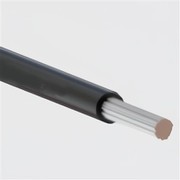
Why Use Anti-Rodent Solar Cables in Ground-Mounted PV Systems?
Sep 20, 2026
Ground-mounted photovoltaic systems expose DC cables to outdoor conditions that are different from many rooftop installations. Cable routes may run close to soil, vegetation, mounting structures, and outdoor electrical equipment, creating more opportunities for mechanical contact and animal damage. In areas with active rodent populations, cable protection becomes an important part of PV system design.
An anti-rodent solar cable adds a dedicated protective layer to the photovoltaic cable structure. Hongzhou's solution uses a stainless steel braided shield around the cable to provide a physical barrier against rodent bites and external mechanical damage while maintaining flexibility for installation.
Why Are Ground-Mounted PV Cables More Exposed?
A ground-mounted solar array usually contains extensive outdoor DC wiring connecting modules, junction boxes, combiner equipment, and inverters. Unlike cables installed inside buildings, these routes can remain exposed to weather, vegetation, animals, and maintenance activity throughout the operating life of the system.
Industry guidance on exposed PV wiring identifies UV exposure, moisture, debris, vegetation, insects, rodents, and other animals among the environmental conditions that need to be considered when routing PV cables.
For large ground-mounted projects, the issue becomes more significant because a solar field can contain long cable runs distributed across a large outdoor area. A localized cable failure may therefore require inspection across multiple strings or sections of the array before the damaged point is identified.
What Can Rodents Do to Solar Cables?
Rodent damage normally begins with the cable's outer protective layers. Repeated biting can damage the jacket and eventually expose the insulation underneath.
Once the cable structure has been compromised, several problems can follow:
- Damage to the outer jacket
- Exposure or deterioration of electrical insulation
- Reduced mechanical protection
- Insulation faults
- Unexpected maintenance and cable replacement
- Possible interruption of the affected PV circuit
The electrical consequences depend on the location and severity of the damage. Rodent-damaged PV conductors have been documented as a concern in exposed PV wiring applications.
The important point is that rodent protection is not simply about preventing visible bite marks. It is about keeping the cable's electrical insulation and mechanical structure intact during outdoor operation.
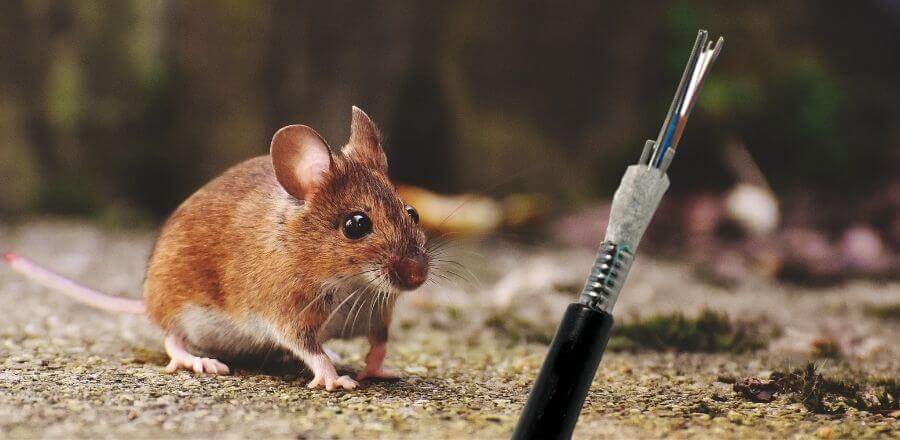
How Does an Anti-Rodent Solar Cable Protect a Ground-Mounted PV System?
There are different approaches to rodent-resistant cable design, including reinforced polymer jackets, deterrent materials, and physical protection layers.
For a stainless steel braided solar cable, protection comes from an additional metal barrier built into the cable structure.
A typical structure consists of:
Tinned Copper Conductor → XLPO Insulation → Stainless Steel Braided Protection → XLPO Outer Jacket
Each layer serves a different purpose.
The stranded tinned copper conductor provides the electrical path for DC power transmission while maintaining the flexibility required for photovoltaic cable routing.
XLPO insulation separates the conductor from the protective layers and provides the electrical insulation required by the PV cable construction.
The stainless steel braid forms a physical barrier around the cable. It helps reduce damage from rodent bites, abrasion, contact with surrounding structures, and other mechanical exposure.
This is the main feature that distinguishes an anti-rodent solar cable from a conventional PV cable without an additional protective layer.
The outer jacket protects the underlying cable structure from outdoor exposure, including sunlight, moisture, and temperature changes.
The result is a multi-layer cable designed to combine electrical performance with additional mechanical protection.
Why Is Stainless Steel Braid Suitable for Ground-Mounted Solar Farms?
Ground-mounted PV projects often require a balance between protection and installation flexibility.
Cable routes may pass between module rows, along mounting structures, near junction boxes, and toward inverters or other electrical equipment. A protective structure that is excessively rigid can make routing more difficult, especially where cables need to follow bends or fit around mounting components.
A stainless steel braided solar cable adds a metal protection layer while retaining the flexible characteristics of a stranded PV cable. Hongzhou specifies its stainless steel braided solar cable for ground-mounted arrays, solar farm cable routes, agricultural PV projects, rooftop installations, and other exposed photovoltaic applications.
This makes the structure particularly relevant when a project needs additional physical protection without changing to a substantially different cable construction.
Ground-Mounted PV Has More Than One Cable Protection Challenge
Rodents are only one potential source of cable damage.
Outdoor PV cables can also encounter:
- Abrasion against mounting structures
- Accidental contact during installation or maintenance
- Vegetation growing around cable routes
- Outdoor moisture and dirt
- UV exposure
- Mechanical impact
- Contact with surrounding objects
A stainless steel braided protection layer addresses the mechanical side of these risks. It does not replace correct cable routing, support, installation, or environmental design.
This distinction matters because an anti-rodent cable is a cable-level protection measure, not a substitute for the complete cable management system.
Anti-Rodent Solar Cable vs. Standard PV Cable
The main difference is the additional protective structure.
| Feature | Standard PV Cable | Anti-Rodent Solar Cable |
|---|---|---|
| PV cable construction | Standard | Standard PV construction with additional protection |
| Conductor | Copper or tinned copper | Tinned copper |
| Insulation | PV-rated insulation | XLPO |
| Rodent protection | No dedicated metal barrier | Stainless steel braided shield |
| Mechanical protection | Standard cable construction | Additional physical barrier |
| Flexibility | Depends on cable construction | Maintained through flexible braided construction |
| Outdoor PV use | Yes | Yes |
| Ground-mounted PV | Yes | Particularly useful where rodent exposure is a concern |
The purpose is not to replace every standard PV cable in a solar project. The additional protection becomes more relevant where the installation environment creates a higher risk of physical or rodent-related cable damage.
What Electrical Specifications Matter?
Adding rodent protection does not change the basic requirement that the cable must meet the electrical demands of the PV system.
IEC 62930:2017 covers single-core cross-linked insulated and sheathed cables for the DC side of photovoltaic systems with rated DC voltage up to and including 1.5 kV.
For Hongzhou's anti-rodent solar cable, the listed specifications include:
| Specification | Available Configuration |
|---|---|
| Cable Type | H1Z2Z2-K Solar PV Cable |
| Conductor | Tinned Copper |
| Conductor Size | 1.5–400 mm² |
| Insulation | XLPO |
| Protective Layer | Stainless Steel Braided Shield |
| Outer Jacket | XLPO |
| Rated Voltage | DC 1500V |
| Test Voltage | 6500V AC |
| Temperature Range | -40°C to +105°C |
| Conductor Structure | Flexible Stranded Copper |
| Customization | Size, color and specifications |
These specifications provide a reference for the cable construction. The final conductor size and cable configuration need to match the electrical design and installation conditions of the specific PV project.
Where Is Anti-Rodent Solar Cable Most Useful?
The value of rodent-resistant PV cable is closely related to the installation environment.
Large solar farms contain extensive outdoor cable networks distributed across module fields. Stainless steel braided protection can be useful where cable routes are exposed to rodent activity or mechanical contact.
PV installations near farmland can have greater interaction with soil, vegetation, and animals. Hongzhou specifically lists agricultural PV among the applications of its anti-rodent solar cable.
Remote PV projects can be more difficult to inspect and repair because of their location. A cable structure with additional physical protection can reduce one potential source of damage in exposed areas.
Open-field solar systems have extensive outdoor cable routes with relatively little physical separation from the surrounding environment. Anti-rodent cable can provide additional protection where animal activity is identified as a project concern.
Why Cable-Level Protection Matters for Large PV Systems
The larger the PV installation, the more cable is distributed across the site.
A damaged cable may not simply mean replacing a short section. Maintenance teams may first need to locate the affected circuit, identify the damaged cable, isolate the relevant equipment, and complete the repair.
For this reason, cable construction can influence maintenance requirements as well as initial installation.
Using a stainless steel braided anti-rodent solar cable does not eliminate the need for inspection or proper cable management. Its purpose is more specific: add physical protection directly around the PV cable where rodent and mechanical damage are known risks.
Anti-Rodent Solar Cable Is a Preventive Cable Structure
Rodent protection can be added in different ways, depending on the cable design and installation environment.
External conduits and protective pipes can provide protection after the cable has been installed. Reinforced cable constructions place the protection directly into the cable itself.
A stainless steel braided solar cable takes the second approach.
Instead of relying entirely on an additional protective component installed around the cable, the cable itself contains a stainless steel braided protective layer. This makes the protection part of the cable construction and allows the cable to be handled as a single cable product during installation.
Why Use Anti-Rodent Solar Cables in Ground-Mounted PV Systems?
For ground-mounted photovoltaic projects, the main reasons are straightforward:
1. Rodent exposure
Outdoor solar fields can create conditions where rodents come into contact with exposed DC cables.
2. Additional mechanical protection
The stainless steel braid provides a physical barrier against biting, abrasion, and external contact.
3. Flexible cable routing
The braided structure provides protection without turning the cable into a rigid protection system.
4. Suitable PV electrical construction
The cable retains a photovoltaic cable structure with tinned copper, XLPO insulation and jacket, and H1Z2Z2-K construction.
5. Application flexibility
The same protection concept can be used across ground-mounted solar farms, agricultural PV, remote installations, and other exposed outdoor PV projects.