How To Identify The Quality Of The Power Cord?
Oct 06, 2022
Power cord is a daily product in people's life and tasks, especially for home decoration, office and production lighting. The quality of power cord is safe. Many fire alarms are caused by aging power lines, unreasonable equipment, or the use of low-quality power lines. Therefore, consumers must keep their eyes open when purchasing power lines, identify carefully, and prevent problems before they happen.
The state requires the use of copper core insulated conductors in new buildings, offices and production lighting. However, the same copper conductors also have inferior copper conductors. The copper core is recycled copper, which contains many impurities. Some inferior copper conductors are even less conductive than iron wires, which is very likely to trigger electrical accidents. At present, there are many wire brands in the market and the price is chaotic, so it is very difficult for consumers to choose. As far as the price of 2.5 mm2 and 4 mm2 copper core wires commonly used in home decoration, office and production lighting is concerned, the price difference of a coil of power cord with the same specification is 10% - 20%, or even greater, due to differences in manufacturers. As for the quality and length, consumers are more difficult to determine.
Identify the quality of power cord method
1. Material quality
High-quality power cords usually use pure copper or high-purity copper as conductors. Copper wire has high electrical conductivity and can effectively reduce power loss. Although aluminum wire is cheap, its electrical conductivity is not as good as copper wire, and it is prone to oxidation, which affects its service life.
2. Structure and design
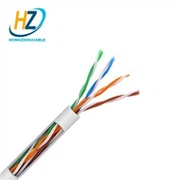
Multiple strands of fine copper wires are twisted: good flexibility and strong bending resistance, suitable for equipment that needs to be moved frequently. Single strand of thick copper wire: good conductivity, but poor flexibility, suitable for fixed wiring.
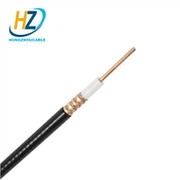
Sheath and insulation layer: The sheath should be thick enough to effectively protect the internal wires and avoid external damage and wear. And the insulation layer of high-quality power cords should be uniform, free of bubbles and impurities to ensure insulation performance and safe use.
3. Electrical performance
Use a multimeter to measure the conductor resistance. The resistance of high-quality copper wires should meet national standards and should not be too high. You can also use an insulation resistance tester to test the insulation resistance value. The insulation resistance of high-quality power cords should be within the specified range to ensure good insulation performance.
4. Certification and labeling
UL certification (Underwriters Laboratories, Inc.), an internationally recognized safety certification, ensures product quality and safety. CE certification (EU) ensures that the product meets EU safety, health and environmental protection requirements. At the same time, the power cord should have clear product identification, including manufacturer name, model, specifications, rated voltage and certification mark.
5. Physical inspection
Inspect the cable visually, the surface should be smooth, without cracks or impurities. The sheath color should be uniform, without obvious color difference. A good quality power cord should be soft to the touch, with a certain degree of elasticity, and should not be too hard or too soft. The sheath and insulation layer should be thick and uniform, and feel textured when held in the hand.
6. Experience and reputation
Choose products with well-known brands and good reputations, which usually have better quality assurance. And check user reviews and professional reviews to understand the actual use of the product.
7. Purchase channels
Purchase in regular stores or official websites to ensure the authenticity and quality assurance of the product. Avoid purchasing from unreliable channels to prevent buying counterfeit and shoddy products.

The main reasons for the price difference of power cords
The reason why the price difference of power cord is large is that the raw materials used in the production process are different. The main raw materials for producing power lines are electrolytic copper, insulating materials and insulating sheathing materials. At present, electrolytic copper on the market is at 65000 yuan per ton, while the recovered miscellaneous copper is at 49000 yuan per ton; The price of high-quality products of the original ecological insulating materials and sheathing materials is 9000 yuan - 10000 yuan per ton, while the price of defective products or recycled products is only 5000 yuan and 6000 yuan per ton, with a wide price difference. In addition, the lack of length and the insufficient glue content of the insulator are also the main reasons for the price difference. The length of each roll of wire is 100 meters ± 0.5 meters for superior products (national standard), that is, at least 99.5 meters per roll, while 95 meters for inferior products, which is also known as the national standard, and some even only 80 meters. By comparison, it is not difficult for consumers to see that the difference in sales price of finished power cord is the difference in material.
Use of plug power cord
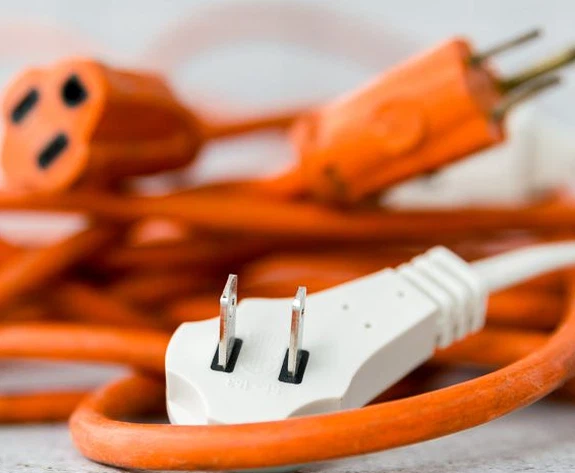
1. When unplugging the plug power cord, you should hold the plug power cord and take it down. Do not just pull the wire, which may cause the copper wire inside the wire to break. Do not press the plug power cord under the furniture or heavy objects to avoid damage and danger.
2. When using, do not bundle it; As the heat of the plug power cord is difficult to dissipate after being bundled, the plastic will melt as the temperature rises, causing the copper wire to be short circuited and ignited.
3. The plug power cord shall not be placed above the stove. The plastic will be melted due to the high temperature of the stove, causing the copper wire to be short circuited and ignited.
4. The plug power cord shall be used under the allowable load capacity, and the multi hole socket connected to the extension cord shall use the product with leakage protection device or overload protection device.
5. The use of old and damaged plug power cord will cause short circuit, electric leakage or inductive current and other hazards, which should be updated immediately.
6. Is the plug power cord in use hot or smelly? This is an overload phenomenon. Stop using the high power electrical appliances immediately and notify the professional electrician for inspection.
7. A simple algorithm to confirm whether the plug power cord is overloaded: the sum of the electrical power carried by the plug power cord/the power supply voltage is the estimated current, which should be less than the rated capacity of the socket when compared with the rated capacity of the socket.
Hot product recommendations

Non Metallic Sheathed Wire
Type: Insulated
Conductor Type: Stranded or Solid
Application: Indoor, Construction, Building
Conductor Material: Copper
Sheath Material: PVC
Insulation Material: PVC
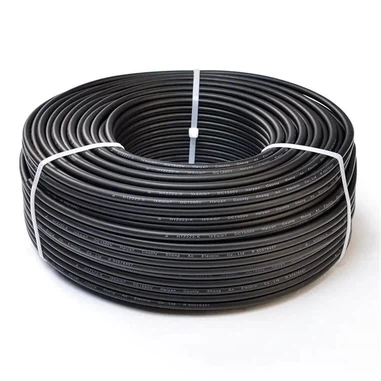
8 Gauge Pv Wire
8 gauge pv wire Conductor: Tinnd Copper
Insulation: XLPO
Insulation Color: Red,Black
Temperature Range: -20°C to +90°C
Nominal Voltage: 0.6/1KV
Test Voltage: 3.5 KV
Standard: TUV
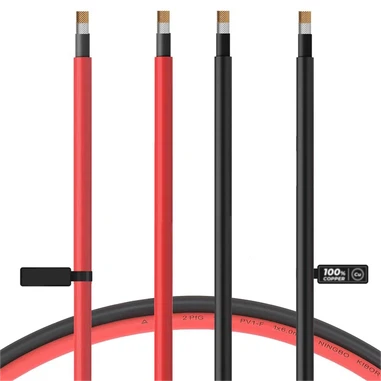
10 Pv Wire 2000v
Conductor: Tinnd Copper
Insulation: XLPO
Insulation Color: Red
Temperature Range: -20°C to +90°C
Nominal Voltage: 0.6/1KV
Test Voltage: 3.5 KV
Standard: TUV

4mm Pv Cable
The 4mm PV cable is a reliable solution for solar energy systems, efficiently transmitting DC from panels. With UV-resistant materials, it's ideal for outdoor use. Its flexibility aids easy installation, adhering to industry standards for safety and performance. It's a key component for sustainable solar solutions.