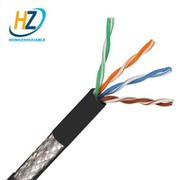
What Is The Difference Between PVC Cable And Flame Retardant Cable?
Jul 28, 2022
1、 What is an PVC insulated cable?
PVC insulated cable: under the condition of fire accident, it is likely to be damaged and unable to operate, but it can prevent the rapid spread of the fire. To put it plainly, ten thousand fires of cable lines can limit the burning within a certain range without proliferation, save other kinds of machinery and equipment, and avoid causing higher damage.
2、 Structural characteristics of insulated wires
The structure of flame-retardant cable is basically the same as that of general cable, and the difference depends on that all or part of the cable sheath, protective wire sleeve, outer protective layer and its auxiliary materials are made of fireproof materials.
3、 What is flame retardant cable?
Flame retardant cable: the cable can still maintain the normal operation of the route for a period of time under burning conditions. It is easy to understand that if there is a fire, the cable is not easy to ignite the short-circuit fault at once, and the control circuit is relatively safe.
4、 Structural characteristics of flame retardant cables
The structure of the flame-retardant cable is basically the same as that of the general cable. The difference depends on the fact that the electrical conductor of the flame-retardant cable is a copper conductor with better fire resistance. Please raise the fireproof layer between the electrical conductor and the cable sheath. The fireproof layer is made of double-layer mica tape coiled and wrapped. Because the allowable operating temperature of mica tape is relatively large, the key to the fire resistance of cable is mica tape.
5、 The difference between the two:
The key difference between flame-retardant cable and flame-retardant wire is that flame-retardant cable can maintain all normal power supply systems for a period of time in case of fire, while insulated wire does not have this feature. This feature depends on the fact that flame-retardant cables play a major role in modern metropolises and public buildings.